Publications
Reviews of AI models and APIs, alongside articles on web development and gamification. We explore capabilities, limitations and practical examples to help you choose a solution for your project.

GigaChat API Review: Sber Models, Cloud.ru, Features, Pricing, and a Comparison with OpenAI and DeepSeek
In 2026, GigaChat API is considerably more complex than it was just a year ago. Under one name, there are effectively two ways to connect to Sber's models: the classic GigaChat API at api.giga.chat and the new commercial Cloud.ru Evolution Foundation Models infrastructure. This distinction is fundamental for a new project because the models, authentication, prices, and even billing methods differ.

Yandex AI Studio Review: Alice AI and YandexGPT Models, Agents, API, Pricing, and a Comparison with OpenAI and DeepSeek
It is no longer accurate to describe Yandex AI Studio as simply “an API for YandexGPT.” The platform has expanded significantly over the past two years. Today, it lets you call Yandex's own models and third-party LLMs; use OpenAI-compatible Responses and Chat Completions APIs; retain conversation context; build text and voice agents; search files and the web; run Python code; connect MCP servers; and generate images.

Cohere API Review: Command A+, RAG, Rerank, Embed, Parse, and Private Deployment in 2026
Cohere stands apart from many companies commonly grouped with OpenAI, Anthropic, or Google. Its platform can generate text, work with images, call functions, and build AI agents, but Cohere's focus has long been enterprise search, RAG, and private model deployment.
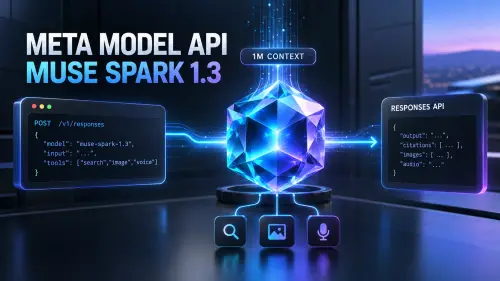
Meta Model API Review: Muse Spark 1.3, Images, Voice, Agents, and Pricing in 2026
Meta has long been an unusual player in the AI developer market. The company released open-weight Llama models, but it effectively had no general-purpose cloud API of its own on the level of OpenAI or Anthropic. Developers had to run models themselves or use AWS, Azure, Groq, Together, OpenRouter, and other inference providers.
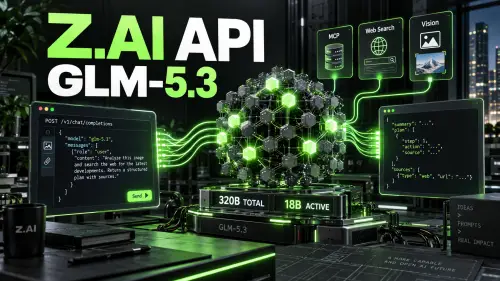
Z.ai and GLM API Review: GLM-5.3, Flash, Tools, Pricing, and Open-Weight Models in 2026
Z.ai is one of the AI providers that remains much less familiar outside China than OpenAI, Anthropic, or Google, even though GLM models have been used for a long time in coding agents, OpenRouter, Hugging Face, and other AI services. In 2026, the platform has become considerably more interesting: the current GLM-5.3 and GLM-5.3-Flash are designed primarily for coding and long-horizon agentic tasks, support a million-token context window and adjustable reasoning, and Flash has also gained native multimodality.
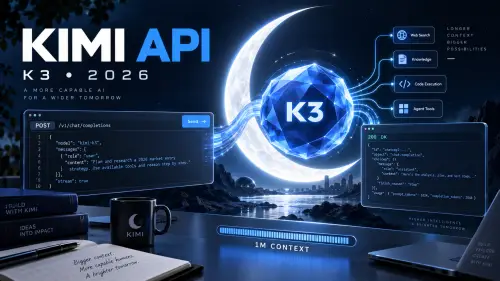
Moonshot Kimi API Review: Kimi K3, Models, Tools, Pricing, and Access in 2026
For a long time, Kimi was known primarily as a Chinese AI assistant with strong long-context capabilities. But Moonshot AI has a separate developer platform — the Kimi API Platform — through which you can connect Kimi models to your own apps, agents, and coding tools.

Alibaba Qwen API and Model Studio Review: Models, Features, Pricing, and Setup in 2026
Qwen is often seen simply as a family of Chinese models that you can download from Hugging Face or access through a third-party inference provider. But Alibaba also has a full-fledged cloud platform of its own: Alibaba Cloud Model Studio. It provides access to commercial and open-weight Qwen models, image and video models, realtime audio, embeddings, OCR, specialized models, and third-party DeepSeek, Kimi, GLM, and MiniMax models.
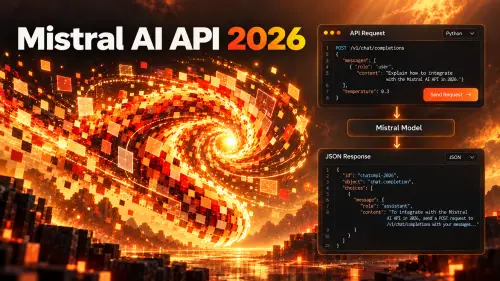
Mistral AI API Review: Models, Agents, OCR, Voice, Pricing, and Open Weights in 2026
Mistral AI occupies an unusual position in the AI API market. On one hand, it is a full cloud platform with Chat Completions, agents, web search, Code Interpreter, RAG, OCR, embeddings, transcription, and speech synthesis. On the other, many of Mistral’s key models are published with open weights, so the same stack can be used not only through the company’s cloud API but also on your own infrastructure.
DeepSeek API Review: Models, Features, Pricing, Registration, and Access from Russia in 2026
DeepSeek is interesting not only as one of the least expensive major AI APIs. In 2026, it is a full developer platform with a 1M-token context window, reasoning, vision, tool calling, Structured Outputs, compatibility with the OpenAI Responses API and Anthropic API, automatic context caching, and official integration with Codex and Claude Code.
xAI Grok API Review: Models, Features, Examples, and Pricing in 2026
Grok started as an assistant inside the X ecosystem, so for a long time its API was easy to see as a rather specialized alternative to OpenAI. That is no longer the case in 2026. xAI is building a full developer platform: the Grok API provides reasoning models, images, files, web search and X search, Python code execution, RAG over your own documents, MCP, image and video generation, real-time voice, speech recognition, and speech synthesis.Related: a DeepSeek API review with current models and pricing.
Google Gemini API Review: Models, Features, Examples, and Pricing in 2026
Over the past two years, the Google Gemini API has evolved from a relatively simple interface to language models into a large multimodal platform. Through one stack, developers can work with text, images, PDFs, audio, and video; connect Google Search and Google Maps; run Python code; build RAG over their own documents; generate images; recognize and synthesize speech; launch real-time voice agents; and use managed AI agents with their own Linux sandbox.Related: an xAI Grok API review with current models and tools.Related: a DeepSeek API review with current models and pricing.
Anthropic Claude API Review: Models, Features, Examples, and Pricing in 2026
Claude has long since become more than just a ChatGPT alternative in a browser. Anthropic is building a separate developer platform: through the Claude API, applications can connect Claude models to websites and apps, analyze large documents and images, return strictly structured data, give the model access to application functions and external systems, use web search and code execution, and build full AI agents for more complex workflows.Related: a Google Gemini API review with current models, tools, and pricing.Related: an xAI Grok API review with current models and tools.Related: a DeepSeek API review with current models and pricing.
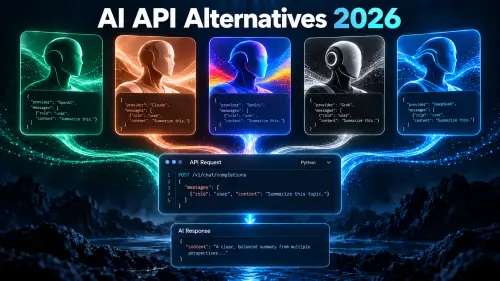
Alternatives to OpenAI API and ChatGPT API in 2026: Claude, Gemini, Grok, DeepSeek, and More
Just a few years ago, choosing a language-model API effectively started and often ended with OpenAI. The market looks different today. Anthropic, Google, xAI, DeepSeek, Mistral, Alibaba, Moonshot, Z.ai, and Meta all have their own APIs and capable models. Russian projects can choose between Yandex AI Studio and GigaChat, while a separate layer of aggregators such as OpenRouter, Amazon Bedrock, and Microsoft Foundry has appeared on top of all of them.Related: a detailed Anthropic Claude API review.Related: a detailed Google Gemini API review.Related: a detailed xAI Grok API review.Related: a detailed DeepSeek API review.
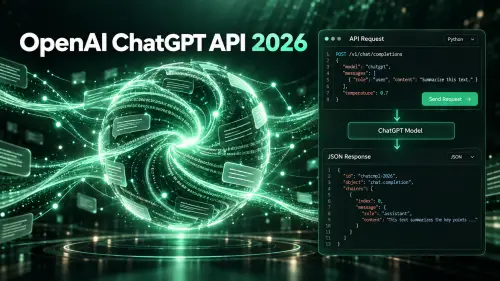
OpenAI ChatGPT API Review: Features, Models, Examples, and Pricing in 2026
Over the past few years, the OpenAI API has changed so much that older guides covering GPT-3.5, GPT-4, the Completions API, and DALL·E no longer describe the modern platform. Today, it is more than an API for sending text to a chat model: it is a set of tools for building multimodal applications, search systems, voice interfaces, and AI agents that can work with external data and call application functions.Related: a dedicated Anthropic Claude API review.Related: a dedicated Google Gemini API review.Related: a dedicated xAI Grok API review.Related: a dedicated DeepSeek API review.

How to set up a debugger in PhpStorm for a project that is running in a VirtualBox
Setting up a debugger in PhpStorm for a project running in a VirtualBox (in this case we are using Vagrant and Homestead on Windows 11 for the Laravel project) involves configuring both the server side and the client side (PhpStorm) for debugging.